

Article Summary
Transparent color-shifting pigments give manufactured products a distinctive appearance by changing their perceived color with the viewing angle and lighting conditions. Unlike conventional solid-color pigments, these special-effect materials can preserve the visual influence of the underlying surface or base color while introducing iridescent transitions and a refined metallic shimmer. For helmet manufacturers, sports equipment brands, and plastic component producers, the result is greater design flexibility and more opportunities to create recognizable product finishes. Successful implementation, however, depends on pigment selection, substrate compatibility, dispersion, processing conditions, and finished-product testing. This guide explains how to evaluate these factors and develop attractive, repeatable finishes for demanding commercial applications.
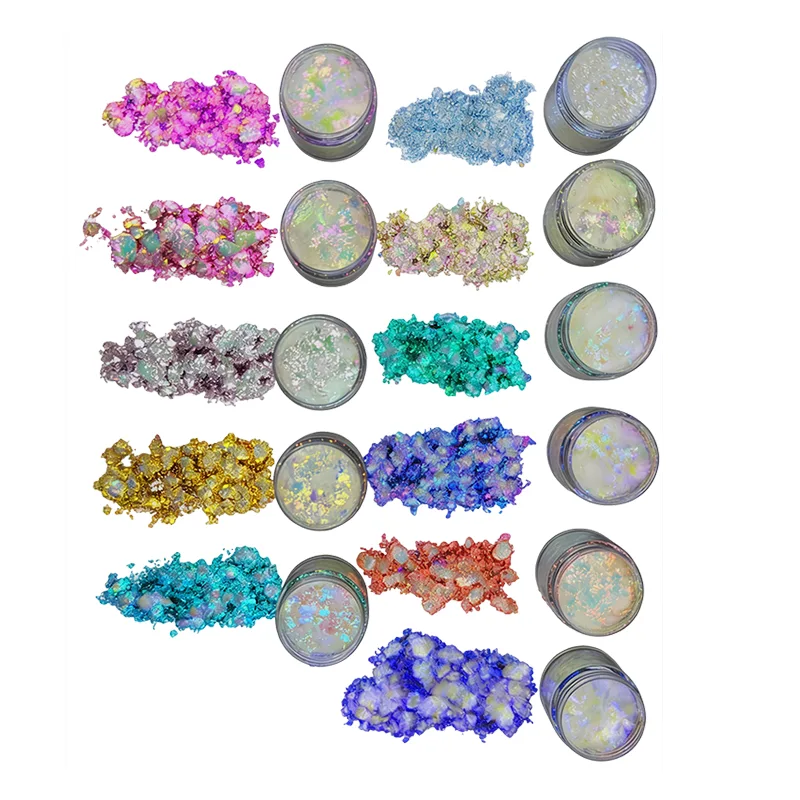
What Are Transparent Color-Shifting Pigments?
Transparent color-shifting pigments are specialty effect pigments designed to produce visible color transitions as the viewing angle or illumination changes. They are particularly useful when a manufacturer wants a finish that looks different from ordinary metallic paint, standard pearlescent coatings, or conventional solid-color plastic.
Many optical color-shifting pigments use carefully engineered multilayer thin-film structures. Light interacts with these layers through optical interference, creating different reflected wavelengths under different viewing conditions. The resulting appearance may transition between hues such as blue and purple, green and magenta, or other coordinated color combinations, depending on the particular pigment grade.
The transparent characteristic is especially important. Rather than completely concealing the underlying surface, a suitable transparent grade allows the base color or substrate appearance to influence the finished effect. Manufacturers can therefore combine a pigment with different background colors to develop multiple visual results from the same pigment family.
For product developers, the real advantage is design flexibility. A carefully selected pigment can make a helmet shell look vivid under direct light, produce subtle gradients along curved surfaces, or give molded plastic components a premium appearance without relying exclusively on complex graphics or multiple decorative layers.
Why Do Manufacturers Choose Transparent Color-Shifting Effects?
Stronger product differentiation
In competitive markets, products with similar functionality can be difficult to distinguish visually. Special-effect finishes create a recognizable appearance that helps brands establish a more consistent design identity across product ranges, collections, and seasonal releases.
More flexibility in color development
Transparent pigments can interact with different base colors, creating a broader range of visual outcomes. A dark base may produce a dramatic, saturated shift, while a light base may create a softer, more delicate iridescent appearance. The exact result depends on the pigment, coating thickness, substrate, and lighting.
Premium visual appeal
Dynamic reflections can add depth and movement to curved or sculpted surfaces. This makes the effect attractive for high-end helmets, performance accessories, sports equipment housings, and consumer products where visual quality influences purchasing decisions.
Potential for a streamlined design system
With appropriate formulation and process control, manufacturers may be able to create coordinated finishes across several product components. This can simplify the development of a product family, although each substrate and production method still requires compatibility testing.
- For brand owners: Develop distinctive finishes that support product positioning.
- For OEM manufacturers: Explore special effects while maintaining defined production requirements.
- For product designers: Coordinate base colors, contours, and visual transitions.
- For purchasing teams: Evaluate pigment consistency, technical support, availability, and total production cost.
How Can Color-Shifting Pigments Improve Helmet Designs?
Helmets are natural candidates for special-effect finishes because their curved shells interact with light from multiple directions. A single surface can display different visual characteristics as the wearer moves, creating a distinctive finish without requiring the shell itself to change shape or function.
Motorcycle helmets
Motorcycle helmet manufacturers can use transparent color-shifting effects to develop premium styling for sport, touring, and lifestyle collections. The pigment may be incorporated into a compatible decorative coating system, allowing designers to combine the effect with a selected base color, clear coat, or graphic treatment.
Cycling and performance helmets
For cycling and other performance helmets, dynamic finishes can complement aerodynamic contours and create a modern appearance. Designers can apply the effect to selected shell areas or coordinate it with logos and contrasting colors.
Industrial and recreational helmets
Special-effect finishes may also be considered for recreational headgear and selected industrial product designs where decorative differentiation is appropriate. The coating system must be compatible with the shell material and the conditions under which the helmet will be used.
Before selecting a pigment for a helmet program, evaluate shell material, coating adhesion, impact-related requirements, ultraviolet exposure, abrasion, cleaning agents, and the intended service environment. Testing must be conducted on representative finished parts rather than relying solely on the pigment's appearance in a sample container.
Which Sports Equipment Can Benefit from Transparent Color-Shifting Pigments?
Sports equipment combines performance requirements with increasingly sophisticated visual design. Transparent color-shifting pigments offer a way to create distinctive finishes on suitable coated surfaces and compatible plastic components.
Protective equipment and accessories
Protective pads, guards, recreational accessories, and selected equipment housings may benefit from a dynamic finish. Product developers should first confirm that the chosen decorative system is suitable for repeated contact, cleaning, impact exposure, and the relevant substrate.
Bicycle components
Selected bicycle accessories, plastic covers, decorative trim, and coated frame surfaces can use angle-dependent effects to emphasize contours and create a recognizable appearance. For frame coatings, the complete coating system must be tested for adhesion, abrasion, weathering, and resistance to expected operating conditions.
Racket and fitness equipment
Racket trims, exercise equipment covers, protective housings, and selected molded accessories can incorporate special-effect colors. These applications are especially relevant when brands want to coordinate the appearance of different product components.
Outdoor recreational products
Equipment exposed to sunlight, moisture, sweat, or frequent handling requires careful finish selection. Weather resistance and durability depend on the complete formulation, substrate, surface preparation, and protective coating—not simply on the pigment category.
When developing a new sports equipment finish, manufacturers should assess both visual performance and practical use conditions. A finish that looks impressive under showroom lighting may appear substantially different outdoors, so samples should be evaluated under realistic illumination before mass production.
How Are Transparent Color-Shifting Pigments Used in Plastic Parts?
Plastic components offer numerous opportunities for decorative effects, from consumer product housings to protective covers and equipment accessories. The main challenge is ensuring that the desired appearance can be achieved without compromising the material's processing behavior or the finished component's required properties.
Injection-molded components
Suitable pigment grades may be incorporated into compatible plastic formulations or used in appropriate decorative coating systems for molded parts. Direct incorporation requires particular attention to polymer compatibility, processing temperature, pigment distribution, and the molding equipment's shear conditions.
Consumer product housings
Translucent, color-shifting finishes can give selected product housings a distinctive appearance. This approach may be useful for accessories, protective covers, and decorative components where the underlying color or surface design should remain visually relevant.
Automotive and recreational plastic trim
Selected non-critical decorative trim and molded accessories may use optical effects to create a premium finish. Components exposed to heat, ultraviolet light, cleaning chemicals, or repeated abrasion should be evaluated against the actual service conditions.
Choosing between direct coloring and surface coating
Direct incorporation can be appropriate when the pigment is compatible with the resin and molding process. Surface coatings may offer greater flexibility in layering, color adjustment, and decorative design. The better approach depends on the part geometry, production volume, required finish, and available manufacturing equipment.
Manufacturers should not assume that a pigment suitable for a spray coating will automatically perform well in injection molding. The thermal stability, shear sensitivity, dispersion behavior, and resin compatibility of the specific grade must be confirmed with the supplier.
How Does the Color-Shifting Effect Work?
The visual effect is closely connected to the way light interacts with the pigment's optical structure. In multilayer interference pigments, light reflects from different interfaces within the structure. Depending on the optical path differences, some wavelengths are reinforced while others are reduced, producing a characteristic color appearance.
As the angle of illumination or observation changes, the optical conditions change as well. The viewer may consequently see a transition between colors rather than one fixed shade. This is commonly described as angle-dependent color travel.
Several factors determine how the effect appears in a finished product:
- Pigment structure and grade: Different designs produce different color transitions and visual intensity.
- Base color: Dark substrates often emphasize contrast and color travel, while light substrates can create a softer appearance.
- Surface smoothness: Surface irregularities can scatter light and reduce visual clarity.
- Application thickness: An inconsistent coating may produce uneven color intensity or coverage.
- Pigment orientation: Particle alignment can influence the uniformity and direction of the optical effect.
- Lighting conditions: Natural daylight, indoor lighting, and directional illumination may produce different impressions.
These variables explain why the same pigment can look different on a flat laboratory card, a curved helmet shell, and a complex injection-molded component. Prototype evaluation is therefore essential before approving a production specification.
How Should Manufacturers Choose the Right Transparent Color-Shifting Pigment?
A successful selection process starts with the finished product's requirements rather than with color alone. Purchasing teams, coating formulators, and product designers should agree on the intended appearance, substrate, manufacturing route, and performance expectations before ordering production quantities.
| Selection Factor | What to Evaluate | Why It Matters |
|---|---|---|
| Optical effect | Color travel, transparency, shimmer, and visual intensity | Ensures the finish matches the design brief. |
| Substrate | Polymer type, surface energy, primer, and coating compatibility | Helps prevent adhesion and processing problems. |
| Manufacturing method | Spraying, coating, printing, or direct plastic incorporation | Determines suitable grades and handling methods. |
| Thermal conditions | Peak temperature, dwell time, and curing conditions | Reduces the risk of unwanted changes during processing. |
| Outdoor exposure | UV exposure, moisture, temperature cycling, and abrasion | Supports durability evaluation for the finished product. |
| Quality consistency | Particle size, batch variation, and color measurement | Helps maintain a consistent appearance at scale. |
| Documentation | Technical data, safety information, and applicable compliance documents | Supports supplier qualification and internal approval. |
Start with the desired appearance
Define the main color transition, desired level of transparency, and overall visual intensity. Reference samples should be assessed at multiple viewing angles and under more than one lighting condition.
Confirm substrate and process compatibility
Provide the pigment supplier with the exact resin, coating system, processing method, and expected temperature range. This information helps narrow the selection to grades that warrant practical testing.
Request samples before production approval
Prepare small test batches and apply them using conditions representative of the intended manufacturing process. Evaluate the actual finished component, including color uniformity, adhesion, surface appearance, and relevant durability properties.
Establish a written specification
Once the target effect is approved, record the pigment grade, formulation, processing parameters, application thickness where applicable, and visual acceptance criteria. Retain approved reference samples for future production comparisons.
How Can Manufacturers Maintain Processing Quality and Color Consistency?
Even a suitable pigment can deliver inconsistent results if the production process is poorly controlled. Transparent color-shifting pigments require particular care because their optical effect depends on particle characteristics, distribution, orientation, and the finished surface.
1. Use appropriate mixing and dispersion
Follow the grade-specific technical instructions. For flake-based optical pigments, excessive shear may damage the particle structure and weaken the intended effect. Low-to-medium-speed mixing may be appropriate for certain coating formulations, but the correct speed and mixing time should be confirmed for the specific system.
2. Control the formulation
Measure the pigment dosage accurately and maintain consistency in resin, solvent, additives, and other formulation components. Excessive pigment loading may affect surface quality or reduce the intended transparency, while insufficient loading may produce a weaker visual effect.
3. Keep the substrate and application conditions consistent
Surface preparation, primer selection, coating thickness, spray distance, curing conditions, and component geometry can all influence the final appearance. Establish controlled operating parameters and avoid unnecessary adjustments between batches.
4. Test the finished product
Depending on the application, a quality plan may include visual inspection, color measurement, adhesion testing, abrasion resistance, weathering, chemical resistance, and thermal evaluation. Helmet and protective equipment manufacturers should also verify that the complete finishing process remains compatible with product safety requirements.
5. Monitor batch-to-batch variation
Retain reference samples and use consistent viewing conditions during visual comparisons. Where appropriate, multi-angle color measurement can help quantify the appearance of special-effect finishes more effectively than a single-angle measurement.
What Common Problems Affect Color-Shifting Pigment Performance?
| Observed Problem | Possible Cause | Recommended Action |
|---|---|---|
| Weak color-shifting effect | Unsuitable base color, incorrect grade, or excessive scattering | Compare approved base colors and review the formulation with the supplier. |
| Uneven appearance | Inconsistent coating thickness, application, or particle orientation | Standardize application parameters and inspect the substrate. |
| Reduced visual brightness | Excessive shear, incompatible additives, or a rough surface | Review mixing equipment, additives, and surface preparation. |
| Poor adhesion | Substrate incompatibility or inadequate preparation | Test primer and coating compatibility on representative parts. |
| Color variation between batches | Differences in formulation, processing, or pigment batches | Maintain reference samples and documented production controls. |
| Unexpected changes after exposure | UV, heat, chemicals, or limitations of the complete coating system | Conduct application-specific accelerated and real-use testing. |
Corrective action should be based on the actual failure mechanism. For example, adding more pigment will not necessarily solve a problem caused by poor adhesion or an incompatible resin. A structured trial plan helps isolate the cause without creating additional production variables.
How Can You Evaluate a Transparent Color-Shifting Pigment Supplier?
Choosing a supplier involves more than comparing unit prices. Reliable technical support, consistent product specifications, and the ability to assist with application development can reduce the time required to move from a design concept to stable production.
When evaluating a pigment manufacturer, consider the following factors:
- Product specialization: Does the supplier offer transparent optical color-shifting grades suitable for your intended application?
- Technical documentation: Can it provide relevant specifications, safety documentation, and available compliance information?
- Sample support: Can you obtain samples for formulation trials and finished-part evaluation?
- Manufacturing consistency: Are batch controls, particle-size checks, and color evaluation procedures documented?
- Application guidance: Can technical staff advise on base colors, dispersion, processing, and troubleshooting?
- Supply planning: Are lead times, packaging, minimum order quantities, and future production requirements clear?
FYOTEC's KalorFeel®, produced by Huizhou Foryou Optical Technology Co., Ltd., specializes in optical color-shifting and chameleon pigments. Its product portfolio includes transparent color-shifting pigments for helmets, sports equipment, and injection-molded parts, alongside other specialty pigment solutions for industrial and decorative applications.
For manufacturers developing new finishes, a useful starting point is to share the substrate type, manufacturing method, target color transition, expected processing temperature, and intended use environment. This allows the technical discussion to focus on the requirements that determine whether a particular pigment grade is appropriate.
Before placing a production order, confirm the specific grade's technical data, compatibility, applicable documentation, and performance on your own finished parts. Product suitability should be established through application testing rather than inferred from general product descriptions.
Frequently Asked Questions About Transparent Color-Shifting Pigments
1. What are transparent color-shifting pigments used for?
They are used to create angle-dependent optical effects on suitable coated or plastic surfaces. Typical applications include helmet finishes, sports equipment, decorative plastic parts, consumer product housings, and selected industrial coatings.
2. How are transparent pigments different from opaque chameleon pigments?
Transparent grades allow more influence from the underlying base color or surface, creating layered or translucent visual effects. Opaque grades generally emphasize coverage and a stronger solid visual presence. The best choice depends on the design objective and application process.
3. Can transparent color-shifting pigments be used on plastic?
Yes, suitable grades can be considered for compatible plastic formulations or coating systems. The resin, processing temperature, shear conditions, pigment structure, and desired finish must be evaluated before production.
4. Which base color produces the strongest color-shifting effect?
A dark base, such as black, often creates a more dramatic contrast and more pronounced color travel. Light-colored bases may produce softer, more translucent effects. Actual results vary by pigment grade, substrate, coating thickness, and illumination.
5. Are color-shifting pigments suitable for outdoor products?
They may be suitable for selected outdoor applications, but durability must be verified for the specific grade and complete formulation. Evaluate UV exposure, moisture, temperature changes, abrasion, and chemical contact as appropriate.
6. Can these pigments be used in helmet coatings?
Suitable grades may be incorporated into compatible decorative coating systems. The complete coating and curing process must be assessed for its effect on the helmet substrate and applicable safety requirements. A decorative finish alone does not demonstrate protective performance.
7. How much pigment should be added to a formulation?
The appropriate dosage depends on the pigment grade, formulation, substrate, and desired optical effect. Follow the supplier's grade-specific technical recommendations and conduct controlled trials instead of applying a universal dosage to every system.
8. How can manufacturers prevent color inconsistency?
Use controlled formulations, consistent substrate preparation, suitable mixing equipment, standardized application conditions, and approved reference samples. For critical applications, multi-angle color measurement and documented batch acceptance criteria can provide additional control.
9. Can the same pigment create different colors on different substrates?
Yes. The underlying color, substrate properties, coating system, and viewing conditions can all affect the perceived result. Test the pigment on the actual substrate and production-representative surface before approving the design.
10. What information should buyers provide when requesting samples?
Provide the application, substrate or resin type, coating system if applicable, manufacturing method, processing temperature, target color transition, desired transparency, and relevant durability requirements. Reference photos or approved color samples can also help clarify the intended effect.
What Is the Best Way to Start a Color-Shifting Pigment Project?
Transparent color-shifting pigments give helmet manufacturers, sports equipment brands, and plastic component producers a flexible way to create distinctive finishes with depth, iridescence, and angle-dependent color transitions. Their greatest value lies in the combination of visual differentiation and the ability to tailor the final appearance through base color, substrate selection, and formulation design.
However, successful implementation requires more than selecting an attractive shade. Manufacturers must confirm compatibility with the material and process, establish suitable dispersion and application conditions, and test the finished component against its actual performance requirements.
A practical development process begins with a clearly defined visual target, followed by sample evaluation, representative production trials, and documented quality criteria. This approach helps reduce formulation uncertainty and supports a smoother transition from prototype to repeatable manufacturing.
Develop Your Next Signature Finish with FYOTEC
Looking for transparent color-shifting pigments for helmets, sports equipment, or plastic parts? FYOTEC's KalorFeel® offers specialized optical pigment solutions for manufacturers exploring distinctive colors and dynamic surface effects.
Share your application details, substrate requirements, target appearance, and processing conditions with our team to discuss a suitable pigment solution for your project.
Learn more about FYOTEC or explore industrial-grade color-shifting pigments. Contact us to discuss samples, technical information, and your specific application requirements.