

How Does Silicone Defoamer Work in Industrial Processes?
2026-06-23
Article Summary
Silicone Defoamer is a highly efficient foam control agent widely used in industrial systems where excessive foam disrupts production efficiency, product quality, and operational stability. This article explains how silicone defoamers work, why foam becomes a critical issue in various industries, and how to select the right formulation for different applications. It also provides practical troubleshooting insights, real-world use cases, and a structured guide for engineers, procurement teams, and production managers seeking reliable foam control solutions.
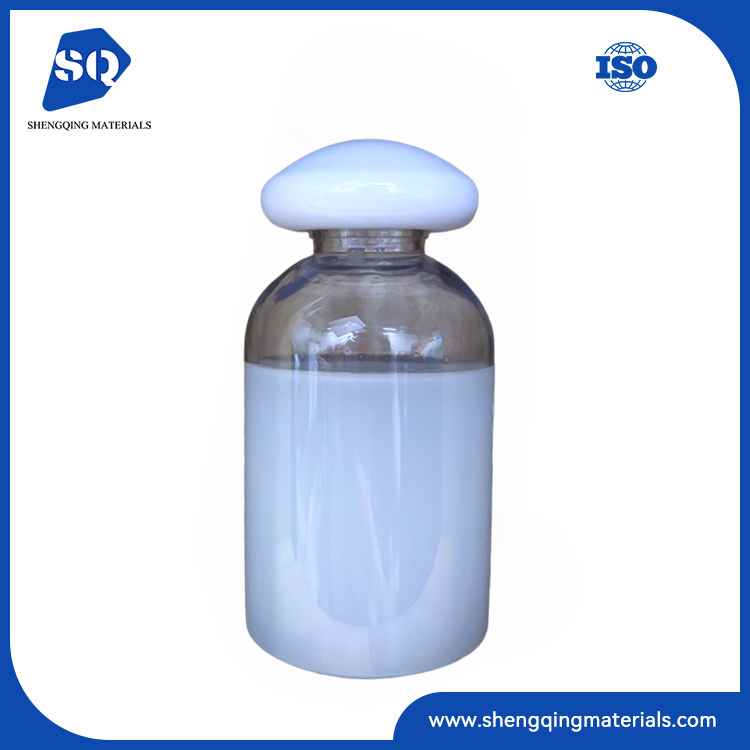
Table of Contents
- Introduction
- What is Silicone Defoamer?
- Why Foam is a Problem in Industrial Systems
- How Silicone Defoamer Works
- Key Industrial Applications
- How to Select the Right Silicone Defoamer
- Common Problems and Troubleshooting
- FAQ
- Conclusion
Introduction
Foam formation is a persistent challenge in industrial manufacturing, affecting everything from chemical processing and wastewater treatment to food production and coatings. When foam becomes excessive, it reduces equipment efficiency, causes overflow issues, and can even compromise product quality. Silicone Defoamer has emerged as one of the most reliable solutions for controlling and eliminating foam in complex systems.
Unlike conventional defoaming agents, silicone-based formulations offer rapid action, long-lasting performance, and compatibility across a wide range of industrial conditions. Understanding how these materials function is essential for optimizing production processes and reducing operational costs.
What is Silicone Defoamer?
A Silicone Defoamer is a chemical additive composed primarily of polydimethylsiloxane (PDMS) and performance-enhancing components such as hydrophobic silica, emulsifiers, and stabilizers. It is designed to eliminate foam by destabilizing the liquid film surrounding air bubbles.
Key characteristics include:
- High surface activity
- Fast foam-breaking performance
- Low dosage requirement
- Strong chemical stability
- Wide temperature resistance
Because of these properties, Silicone Defoamer is widely used in both high-temperature and high-shear industrial environments.
Why Foam is a Problem in Industrial Systems
Foam may appear harmless, but in industrial operations it creates multiple technical and economic challenges.
- Reduced production efficiency: Foam occupies reactor or tank volume, reducing usable capacity.
- Equipment malfunction: Foam overflow can damage sensors and pipelines.
- Product contamination: Air entrapment affects purity and consistency.
- Energy waste: Additional agitation is often required to control foam.
- Process instability: Foam leads to inaccurate level measurements.
Industries such as wastewater treatment, petrochemicals, fermentation, and coatings are especially sensitive to foam-related disruptions.
How Silicone Defoamer Works
The working mechanism of Silicone Defoamer is based on interfacial chemistry and surface tension disruption. Foam is stabilized by surfactants that form elastic films around gas bubbles. Silicone defoamers destabilize these films through several coordinated actions.
1. Spreading on Foam Surface
Silicone compounds have extremely low surface tension. When introduced into a foaming system, they spread rapidly across the foam surface.
2. Penetration into Foam Film
Hydrophobic particles within the formulation penetrate the liquid film surrounding bubbles, weakening structural integrity.
3. Film Rupture
Once the foam film is destabilized, it collapses, releasing trapped gas and eliminating foam.
4. Prevention of Re-foaming
Some formulations create a residual anti-foaming layer that prevents rapid foam regeneration.
This multi-step mechanism ensures both immediate foam breaking and long-term foam suppression.
Key Industrial Applications
Silicone Defoamer is widely used across multiple industries due to its versatility and efficiency.
- Chemical Manufacturing: Controls foam in reactors and mixing tanks.
- Wastewater Treatment: Reduces foam in aeration basins.
- Food and Beverage: Ensures stable fermentation processes.
- Textile Industry: Prevents foam during dyeing and finishing.
- Oil & Gas: Improves separation efficiency in drilling fluids.
- Paper Production: Enhances pulp processing consistency.
Each application requires a tailored formulation depending on temperature, pH, and system composition.
How to Select the Right Silicone Defoamer
Choosing the correct Silicone Defoamer requires evaluating multiple operational parameters.
| Selection Factor | Description | Recommended Consideration |
|---|---|---|
| System Type | Aqueous or non-aqueous systems | Match formulation compatibility |
| Temperature Range | Operating temperature of process | High-temp resistant silicone grades |
| pH Level | Acidic or alkaline conditions | Stable emulsified formulations |
| Shear Conditions | Mixing intensity | High-stability emulsions for strong agitation |
| Dosage Sensitivity | Efficiency per unit volume | Low-dosage high-performance products |
Proper selection ensures maximum foam control efficiency while minimizing chemical consumption and operational cost.
Common Problems and Troubleshooting
Problem 1: Foam returns quickly after dosing
Possible cause: insufficient dosage or incompatible formulation. Solution: adjust concentration or switch to a higher stability grade.
Problem 2: Poor dispersion in system
Possible cause: high viscosity or poor emulsification. Solution: use pre-dispersed or emulsified silicone defoamers.
Problem 3: Product contamination issues
Possible cause: overdosing or incorrect grade selection. Solution: optimize dosage and ensure food-grade or process-compatible selection if required.
Problem 4: Reduced effectiveness at high temperature
Possible cause: low thermal stability formulation. Solution: choose high-temperature resistant silicone systems.
FAQ
Q1: What makes Silicone Defoamer more effective than mineral oil-based defoamers?
Silicone Defoamer has significantly lower surface tension and better spreading capability, allowing it to break foam faster and more efficiently at lower dosages.
Q2: Can Silicone Defoamer be used in food-related processes?
Yes, but only specific food-grade formulations that comply with regulatory standards should be used in food and beverage applications.
Q3: Does Silicone Defoamer affect product quality?
When properly selected and dosed, it does not negatively impact product quality. Overdosing, however, may cause surface defects or contamination issues.
Q4: How is Silicone Defoamer typically added into systems?
It can be added directly or pre-diluted depending on system sensitivity. Continuous dosing systems are common in large-scale industrial operations.
Q5: What industries benefit most from Silicone Defoamer?
Industries with high agitation, fermentation, or chemical reactions such as wastewater treatment, petrochemicals, and coatings benefit the most.
Conclusion
Silicone Defoamer plays a critical role in maintaining operational stability across multiple industries. By efficiently breaking foam and preventing its recurrence, it enhances productivity, reduces equipment strain, and improves product consistency. Understanding its mechanism and selecting the correct formulation are essential steps for achieving optimal performance in industrial systems.
As industrial processes become more complex, the demand for high-performance foam control solutions continues to grow, making silicone-based technologies a preferred choice in modern manufacturing environments.
For high-quality Silicone Defoamer solutions tailored to your industrial needs, Shengqing Materials provides reliable formulations designed for efficiency, stability, and cost-effectiveness.
If you are looking for expert guidance or customized foam control solutions, please contact us at Shengqing Materials to discuss your requirements and get professional support for your application.