

How Do Aluminum-Free High-Chroma Opaque Color-Shifting Pigments Enhance Lip Gloss and Face Makeup?
2026-11-10
Aluminum-Free High-Chroma Opaque Color-Shifting Pigments for Intense Lip Gloss and Face Makeup offer cosmetic developers an opportunity to combine vivid color payoff, noticeable coverage, and multidimensional optical effects. However, achieving a beautiful color-shifting finish is not simply a matter of adding more pigment. Particle characteristics, dispersion quality, base compatibility, and the intended application all influence the final result.
This guide explores how aluminum-free high-chroma opaque color-shifting pigments work, how to select the right grade, and how to incorporate them into lip gloss, liquid lipstick, and face makeup formulations. It also explains the practical considerations that help cosmetic manufacturers develop attractive, consistent, and commercially viable products.
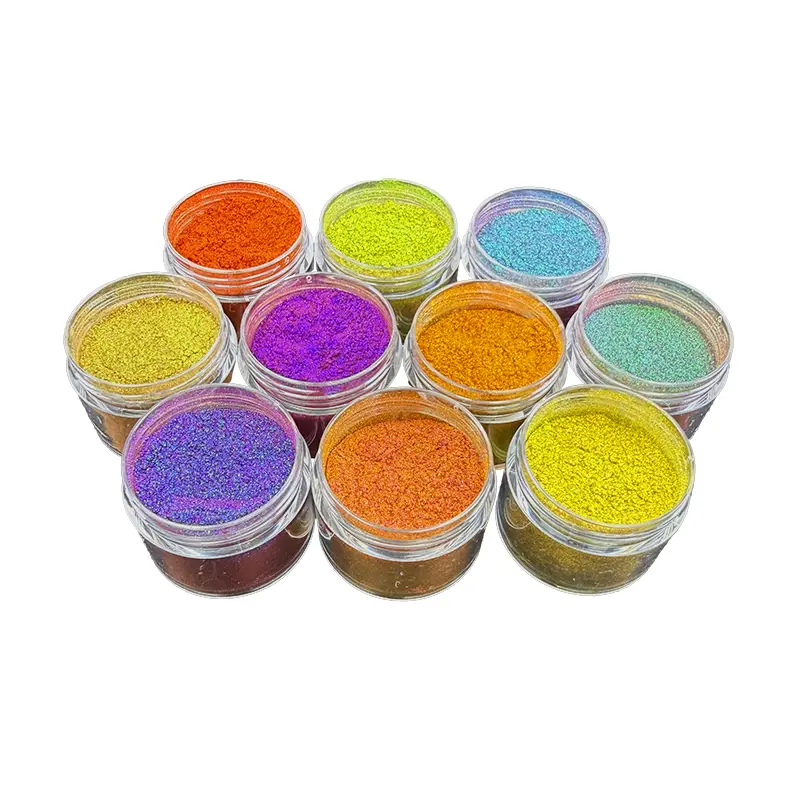
1. Why Are Aluminum-Free Color-Shifting Pigments Gaining Attention?
The color cosmetics market continues to explore more distinctive visual effects. Consumers increasingly expect lip products and face makeup to deliver more than a conventional shade. They look for saturated colors, reflective finishes, dimensional appearance, and unique effects that stand out under different lighting conditions.
For cosmetic brands, these expectations create a formulation challenge. Traditional colorants can provide strong pigmentation or basic coverage, but they may not deliver the multidimensional appearance required for modern color-shifting makeup.
Aluminum-free high-chroma opaque color-shifting pigments address a specific product-development direction: creating intense, visually distinctive colors while meeting formulation requirements that exclude aluminum-containing pigment materials.
Designed to deliver noticeable, saturated color effects for expressive lip and face makeup.
Supports stronger visual coverage and a more pronounced color presence than a purely transparent shimmer effect.
Creates an attractive color-shifting appearance that adds depth to cosmetic products.
Provides an option for brands seeking pigment materials without intentionally added aluminum-containing pigment structures.
It is important to distinguish an aluminum-free pigment specification from a general claim that an entire finished cosmetic product contains absolutely no aluminum. Manufacturers should verify the actual material specification, analytical results, and finished-formula composition before making ingredient claims.
2. How Do High-Chroma Opaque Pigments Create Their Visual Effects?
Color-shifting pigments produce distinctive visual effects through the interaction of light with specially structured pigment particles. Depending on the pigment technology, reflected and interfered light can create different perceived colors as the viewing angle or illumination changes.
Unlike conventional soluble dyes, effect pigments generally function as dispersed solid particles. Their appearance depends on factors such as particle size, surface characteristics, optical structure, orientation, and the surrounding formulation.
2.1 Understanding High-Chroma Color Performance
Chroma describes the intensity or saturation of a color. A high-chroma pigment is intended to produce a vivid and visually strong shade rather than a muted or grayish appearance.
For lip gloss manufacturers, this is particularly important because transparent gloss bases can dilute the visual strength of a color. A pigment with strong color expression helps create a more noticeable result without relying entirely on conventional soluble colorants.
2.2 Understanding Opaque and Color-Shifting Effects
Opacity refers to the ability of a colored layer to reduce the visibility of the underlying surface or base color. In practical makeup development, opaque color effects can help brands create more substantial lip coverage and stronger face makeup shades.
Color shifting introduces another dimension. Rather than displaying exactly the same appearance from every direction, the pigment produces different optical impressions under changing viewing conditions.
When these characteristics are combined, the result can be a more expressive makeup finish with both noticeable color coverage and visual depth.
2.3 Why Particle Size Matters
Particle size affects appearance, application feel, dispersion behavior, and the visual texture of the finished product. Fine particles generally support a more refined appearance, while larger effect particles may produce more noticeable visual reflections.
For the aluminum-free high-chroma opaque color series from FYOTEC's KalorFeel, the stated median particle size range (Dv50) is approximately 35–65 μm, with selected grades available in the 45–65 μm range.
However, Dv50 alone does not describe the complete particle-size distribution. Manufacturers should also evaluate the full distribution, agglomeration behavior, and application performance in the intended formula.
3. What Makes These Pigments Suitable for Intense Lip Gloss?
Lip gloss formulations require a careful balance between color intensity, shine, spreadability, adhesion, and comfortable wear. A pigment that looks impressive as a dry powder may behave differently once incorporated into an oil-based or gel-based gloss.
High-chroma opaque color-shifting pigments can help cosmetic developers create several distinctive lip makeup effects.
3.1 Creating Bold, High-Impact Lip Colors
For brands developing intense lip glosses, conventional transparent shimmer may not provide enough visual coverage. Opaque color-shifting pigments help create a more substantial color appearance while maintaining the opportunity for a multidimensional finish.
They can be explored in:
- High-pigmentation lip gloss.
- Metallic-effect and multidimensional lip glaze.
- Color-shifting liquid lip products.
- Special-edition and statement-color lip collections.
- Layered lip products combining a colored base with reflective effects.
3.2 Improving Visual Depth in Gloss Formulas
A conventional glossy finish mainly emphasizes surface shine. Introducing a suitable color-shifting pigment can create additional optical depth, making the lip color appear more dynamic as the lips move.
This approach is particularly useful for brands developing statement shades, fashion-inspired collections, and products designed for visually distinctive makeup looks.
3.3 Choosing the Appropriate Addition Level
The pigment concentration influences color intensity, coverage, viscosity, and overall product appearance. A higher concentration does not automatically produce a better gloss.
For the relevant KalorFeel pigment series, the following ranges can serve as initial formulation references:
| Application | Suggested Starting Range | Development Objective |
|---|---|---|
| Lip gloss | 1%–5% | Color expression and multidimensional shine |
| High-pigmentation liquid lipstick | 5%–15% | Stronger color payoff and coverage |
| Liquid or cream highlighter | 1%–5% | Reflective color effects and luminous appearance |
These values are product-specific starting references rather than universal formulation standards. The final concentration should be established through compatibility testing, sensory evaluation, stability testing, and applicable cosmetic regulations.
4. How Can They Improve Face Makeup Performance?
Face makeup requires different optical characteristics depending on the product format. A highlighter may prioritize light reflection, while a complexion product may require coverage, uniformity, and a controlled finish.
High-chroma opaque color-shifting pigments can be evaluated in selected face makeup applications where distinctive color and multidimensional visual effects are desired.
4.1 Highlighter Powder and Cream
Highlighters are designed to emphasize selected areas of the face through reflected light. A suitable color-shifting pigment can create a more distinctive finish on the cheekbones, brow area, and other highlighting zones.
Depending on the grade and formulation, the resulting effect may range from a refined reflective appearance to a more noticeable multidimensional color effect.
4.2 Liquid Highlighter
Liquid highlighters often use oil-based, silicone-based, or emulsion systems. Pigment compatibility with the continuous phase is essential for achieving even distribution and consistent application.
When selecting a pigment, formulators should examine its wetting characteristics, settling behavior, and compatibility with the existing thickening and stabilizing system.
4.3 Creative Face Makeup Collections
For experimental and fashion-oriented makeup, high-chroma color effects can help brands create more expressive visual concepts. They can be evaluated in selected cream makeup, specialty face products, and other permitted decorative cosmetic formats.
5. How Should Formulators Select the Right Pigment?
Choosing a cosmetic pigment requires more than matching a sample color. The material must also perform consistently in the finished formulation and meet the brand's technical and regulatory requirements.
The following factors provide a practical selection framework.
| Evaluation Factor | What to Examine | Why It Matters |
|---|---|---|
| Color performance | Hue, chroma, opacity, and angle-dependent appearance | Ensures the intended visual effect |
| Particle size | Dv50 and full particle-size distribution | Influences texture and appearance |
| Dispersion | Wetting, agglomeration, and distribution | Helps prevent uneven color |
| Formula compatibility | Oil, wax, silicone, and emulsion systems | Supports formulation stability |
| Safety documentation | Purity, heavy metals, intended-use information | Supports responsible product development |
| Batch consistency | Color difference and particle distribution | Helps maintain repeatable production |
5.1 Verify the Aluminum-Free Specification
When aluminum-free materials are a mandatory purchasing requirement, ask the supplier to clarify the material composition and the meaning of the aluminum-free claim.
Useful information includes:
- Raw material composition and relevant ingredient declarations.
- Information about the pigment's substrate and coating structure.
- Available aluminum-content testing or analytical documentation.
- Batch-specific quality information where applicable.
- Confirmation of any additional ingredient exclusions required by the brand.
Clear documentation helps avoid misunderstandings between the purchasing team, formulation laboratory, regulatory department, and finished-product manufacturer.
6. How Can You Incorporate Pigments into Cosmetic Formulas?
Even a high-performance pigment can produce disappointing results when it is incorporated incorrectly. Inconsistent dispersion, excessive mechanical processing, and unsuitable mixing conditions may affect the final appearance.
A controlled development process can reduce these problems.
- Define the target appearance Establish the required shade, opacity, color-shifting effect, gloss level, and application feel before selecting the pigment.
- Check the formulation system Identify the oil phase, waxes, emollients, film-forming ingredients, and other components that may influence pigment wetting and suspension.
- Prepare a compatible premix Gradually introduce the pigment into a suitable portion of the compatible formulation phase. Ensure that the powder is wetted evenly before completing the batch.
- Control mixing conditions Use a suitable mixing process to distribute the pigment uniformly. Avoid unnecessary high-energy grinding or processing that may damage effect-pigment structures.
- Adjust the pigment concentration Prepare several laboratory samples at different addition levels. Compare color intensity, opacity, texture, and application performance.
- Evaluate the finished formula Check appearance under different lighting conditions and viewing angles. Conduct stability and packaging compatibility tests before moving to production.
Common Formulation Problems and Practical Solutions
| Problem | Possible Cause | Suggested Action |
|---|---|---|
| Uneven color | Insufficient wetting or dispersion | Optimize premixing and mixing sequence |
| Weak color-shifting effect | Unsuitable base, pigment loading, or viewing conditions | Review grade selection and test multiple film thicknesses |
| Excessive settling | Particle characteristics or insufficient suspension structure | Review viscosity and suspension system |
| Uncomfortable texture | Particle size or excessive pigment loading | Evaluate a different grade or lower concentration |
| Color variation between batches | Raw material or process variation | Strengthen incoming inspection and process controls |
7. What Technical Factors Affect Color and Formulation Stability?
Long-term product performance is an important consideration for cosmetic manufacturers. A formula may look attractive immediately after production but develop problems during storage, transportation, or repeated consumer use.
7.1 Dispersion and Suspension Stability
Effect pigments must remain sufficiently and uniformly distributed throughout the cosmetic base. In liquid gloss and cream formulations, gravity can cause particles to settle if the formulation does not provide adequate suspension properties.
Formulators should assess the interaction between pigment characteristics and the rheological structure of the base. Viscosity, yield behavior, and the choice of suspending ingredients can all influence particle distribution.
7.2 Compatibility with Other Ingredients
Oils, waxes, emulsifiers, preservatives, and film-forming materials may influence the final appearance and stability of a pigment-containing formula.
Compatibility testing should therefore use the actual ingredient system rather than relying exclusively on a pigment's performance in a simple laboratory dispersion.
7.3 Packaging and Storage Conditions
Packaging can affect the consumer experience and the stability of finished cosmetics. Manufacturers should evaluate whether the selected packaging is compatible with the formula and whether it protects the product from unnecessary environmental exposure.
Stability testing should consider appropriate temperature conditions, light exposure, storage duration, and packaging interactions based on the intended product and market requirements.
7.4 Quality Control Before Commercial Production
Before scaling up, manufacturers should establish measurable quality criteria for the pigment and finished product.
- Appearance and color comparison against approved standards.
- Particle-size distribution and dispersion assessment.
- Viscosity and physical stability monitoring.
- Microbiological quality evaluation where applicable.
- Heavy metal and relevant purity testing.
- Packaging compatibility and finished-product safety assessment.
8. How Can Cosmetic Manufacturers Evaluate Pigment Quality?
For B2B buyers, a reliable supplier should provide more than a color sample. Consistent technical information and effective communication are essential when developing a new cosmetic collection or maintaining an existing product line.
Before confirming a bulk order, consider requesting the following information.
| Document or Service | Purchasing Value |
|---|---|
| TDS (Technical Data Sheet) | Provides product specifications and technical guidance. |
| MSDS / SDS | Provides relevant safety and handling information. |
| Certificate of Analysis | Supports batch-specific quality verification when available. |
| Composition information | Helps verify ingredient requirements and product suitability. |
| Application samples | Allows laboratory evaluation in the actual cosmetic base. |
| Regulatory support | Helps buyers assess market-specific documentation requirements. |
Cosmetic regulations differ between markets and product categories. Buyers should confirm that each pigment is permitted for its intended application and that the finished product meets the requirements of the countries where it will be sold.
For lip products in particular, intended-use suitability, impurity limits, heavy metal controls, and relevant safety assessments should be reviewed before commercial use.
9. Why Choose FYOTEC's KalorFeel?
Developing a successful color cosmetics product requires cooperation between pigment suppliers and cosmetic manufacturers. Beyond providing attractive colors, a supplier should understand the technical challenges involved in creating consistent, stable, and application-appropriate formulas.
FYOTEC's KalorFeel focuses on color-shifting and special-effect pigments for cosmetic applications, including lip gloss, liquid lipstick, lipstick, highlighter powder, and liquid or cream highlighter.
9.1 A Dedicated Aluminum-Free High-Chroma Opaque Series
The aluminum-free high-chroma opaque color series is designed for cosmetic developers seeking stronger color expression and a distinctive visual finish. Its application possibilities make it worth evaluating for high-impact lip products and selected face makeup concepts.
9.2 Controlled Manufacturing and Quality Management
FYOTEC's KalorFeel reports an internal quality management system established in 2002 and ISO 9001 certification obtained in 2013. Its manufacturing approach includes monitoring of coating parameters, particle size, and color matching processes.
Such process controls are important for reducing raw material variation and supporting consistent pigment performance across production batches.
9.3 Technical Information and Application Support
Different cosmetic bases require different formulation approaches. Having access to technical specifications, application recommendations, and product samples helps manufacturers assess whether a particular pigment grade meets their requirements.
For buyers developing new lip gloss or face makeup collections, supplier communication should cover:
- Available colors and pigment grades.
- Aluminum-free composition requirements.
- Particle-size specifications.
- Recommended application and addition levels.
- Technical and safety documentation.
- Sample availability and bulk purchasing conditions.
10. Frequently Asked Questions
Q1. What are aluminum-free high-chroma opaque color-shifting pigments?
They are specialty cosmetic effect pigments developed to provide vivid color expression, a more opaque visual appearance, and multidimensional color-shifting effects without intentionally using aluminum-containing pigment structures. Buyers should verify the exact composition and analytical specifications with the supplier.
Q2. Can these pigments be used in lip gloss?
Yes. Selected cosmetic-grade aluminum-free high-chroma opaque color-shifting pigments are designed for lip makeup applications. Compatibility, intended-use suitability, and applicable regulatory requirements should be confirmed for the specific grade.
Q3. What is the recommended pigment concentration for lip gloss?
For the relevant FYOTEC's KalorFeel series, 1%–5% is a suggested starting range for lip gloss. The ideal concentration depends on the desired opacity, color intensity, base formulation, and application performance.
Q4. Are these pigments suitable for liquid lipstick?
Selected grades can be evaluated in liquid lipstick formulations. The stated initial reference range for high-pigmentation liquid lipstick is 5%–15%. Manufacturers should conduct laboratory testing to optimize the final formula.
Q5. Can the pigments be used in face highlighters?
Yes. Suitable grades can be evaluated in powder, cream, and liquid highlighter products. The recommended starting levels for highlighter powder are 10%–70%, while liquid and cream highlighters have a suggested starting range of 1%–5% for the relevant series.
Q6. What particle size is available?
The aluminum-free high-chroma opaque color series has a stated Dv50 range of approximately 35–65 μm, with selected grades available in the 45–65 μm range. Specific particle-size requirements should be confirmed against the individual product specification.
Q7. How can manufacturers prevent pigment settling in lip gloss?
Start by ensuring proper pigment wetting and dispersion. Then evaluate the viscosity and suspension properties of the gloss base. A suitable formulation structure can help maintain a more uniform pigment distribution during storage.
Q8. Does aluminum-free mean the finished cosmetic contains absolutely no aluminum?
Not necessarily. An aluminum-free pigment specification does not automatically guarantee that every other ingredient in the finished formula is aluminum-free. Manufacturers should review all raw materials and obtain appropriate analytical evidence before making a finished-product claim.
Q9. What documents should buyers request before ordering?
Buyers can request a TDS, SDS, available Certificate of Analysis, composition information, relevant purity and heavy metal testing information, and application guidance. Additional documentation may be needed depending on the intended product and sales market.
Q10. Can I request samples before placing a bulk order?
Yes. Sample evaluation is a practical way to compare shades, dispersion behavior, opacity, and finished-product appearance. Contact FYOTEC's KalorFeel to confirm available colors, sample quantities, shipping arrangements, and product specifications.
Develop More Distinctive Color Cosmetics with FYOTEC's KalorFeel
Looking for aluminum-free high-chroma opaque color-shifting pigments for intense lip gloss, liquid lipstick, or face makeup?
FYOTEC's KalorFeel provides cosmetic pigment solutions for brands and manufacturers seeking distinctive color effects and dependable raw material quality. Tell us about your target shade, formulation type, particle-size requirements, and application goals.
Contact us today to request product specifications, explore available colors, and discuss samples for your next cosmetic development project.
Contact FYOTEC's KalorFeelNote: Pigment addition levels and technical specifications in this article are reference values for the specified product series, not universal formulation instructions. Final use levels, safety, regulatory compliance, and finished-product performance must be evaluated for each individual formulation and target market.